Sunday, May 10, 2026

Dream Like

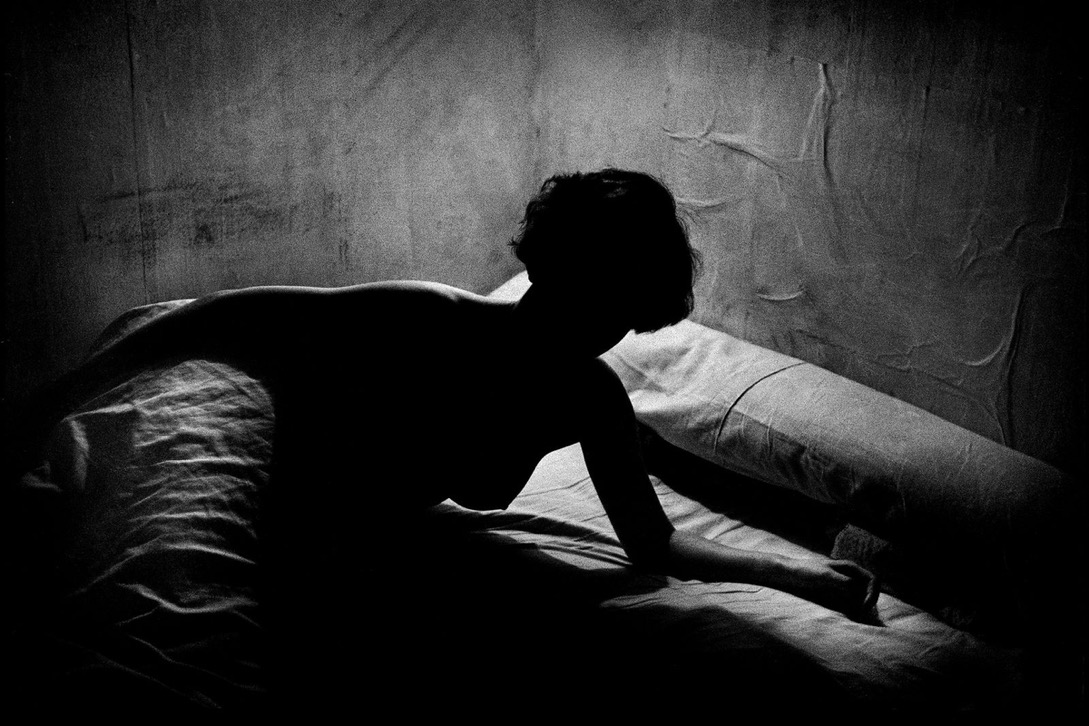
At 3:00 a.m., the apartment becomes something softer and stranger, a room held together by shadow and silence. When the woman rises from the couch, it’s not clear if she is fully awake, or lost to sleep. She moves as if carried by something quieter than willpower, still wrapped in the afterglow of a dream that has not quite let go of her body.


That is what makes this hour feel so strange. The self we know in daylight — the one that speaks clearly, chooses quickly, and keeps itself composed — has not yet returned. What remains is something more porous, more instinctive, less edited. Carl Jung might have called it a crossing into a deeper shared world, where the boundary between inner life and outer reality begins to loosen. In the dark, there is no need to perform identity. There is only movement, hesitation, breath.


As she walks towards the bathroom, half-lit by a stripe of streetlight, her body seems almost dreamlike itself. Marcel Proust understood this in a different way: those in-between moments, when we are neither fully asleep nor fully awake, can feel like the truest kind of time. Memory, dream, and waking life blur into one another. The mind does not organize itself so much as drift through a haze of overlapping impressions.


Even the apartment joins in this quiet dissolution. The refrigerator hums. The pipes stay still. Chairs and corners lose their familiar names and become shapes in the dark. Everything feels slightly unfamiliar, as if the room itself has slipped out of ordinary use and become a private landscape of shadows. Her half-dressed body fits that atmosphere perfectly. She is exposed, but not in the way daylight exposes us. This is a different kind of openness — one without audience, without explanation.


That may be why this moment feels so intimate. It is one of the few times we meet ourselves without the pressure of being someone. In that threshold space, identity let’s go. The woman is both ordinary and ungraspable, grounded in her body and drifting in thought. She is in transit between two worlds, and neither world has fully claimed her yet.


For a few minutes, there is only the dark, the hum of the apartment, and the strange freedom of being nobody in particular.

Monday, May 4, 2026

Fix You

The room feels damp, rain has settled into the wood and air. A laptop glows blue in the corner, a bedside lamp giving off that low amber light that makes everything feel quieter than it is. Through a phone line, there is a silence so heavy it seems to occupy the room with you. You reach out with a word, a touch, a promise. That is often what love becomes in moments of grief: a reaching out. We speak anyway, even when language cannot really cross the distance, because saying nothing would mean admitting how helpless we feel.


Coldplay’s “Fix You” has become more than a song. It has settled into the emotional memory of a whole generation, like a kind of secular prayer for people who are hurting. But at the center of it is a difficult idea: the wish to fix someone. That word carries comfort, but also a quiet violence. To fix suggests that pain is a defect, that a wounded person can be returned to some earlier state, as if grief were a broken object and not a life-changing force.

That is where the song touches something deeply cultural in us. We are trained to think of emotional pain as something that should be repaired quickly, efficiently, and with purpose. We want to guide people back towards light because darkness unsettles us. In relationships, this can create a subtle imbalance. One person becomes the rescuer, the steady hand, the one who builds a shelter around the other’s collapse. But grief is not a machine fault. It does not want to be corrected, rather to be carried, endured, and lived through.

What makes the song moving is also what makes it complicated. Chris Martin’s voice does not sound triumphant. It sounds tender, almost protective. There is a softness in it that refuses bravado. He sings as someone who stays beside sorrow. And when the music rises into its famous swell, it gives us the feeling of release we long for, even if real life rarely offers such clean resolution.

Maybe that is why we hold on to the idea of fixing. The truth is harder: some things cannot be repaired, only accompanied. We cannot always heal one another, but we can remain present in the dark.

Friday, May 1, 2026

Fruits for Sale

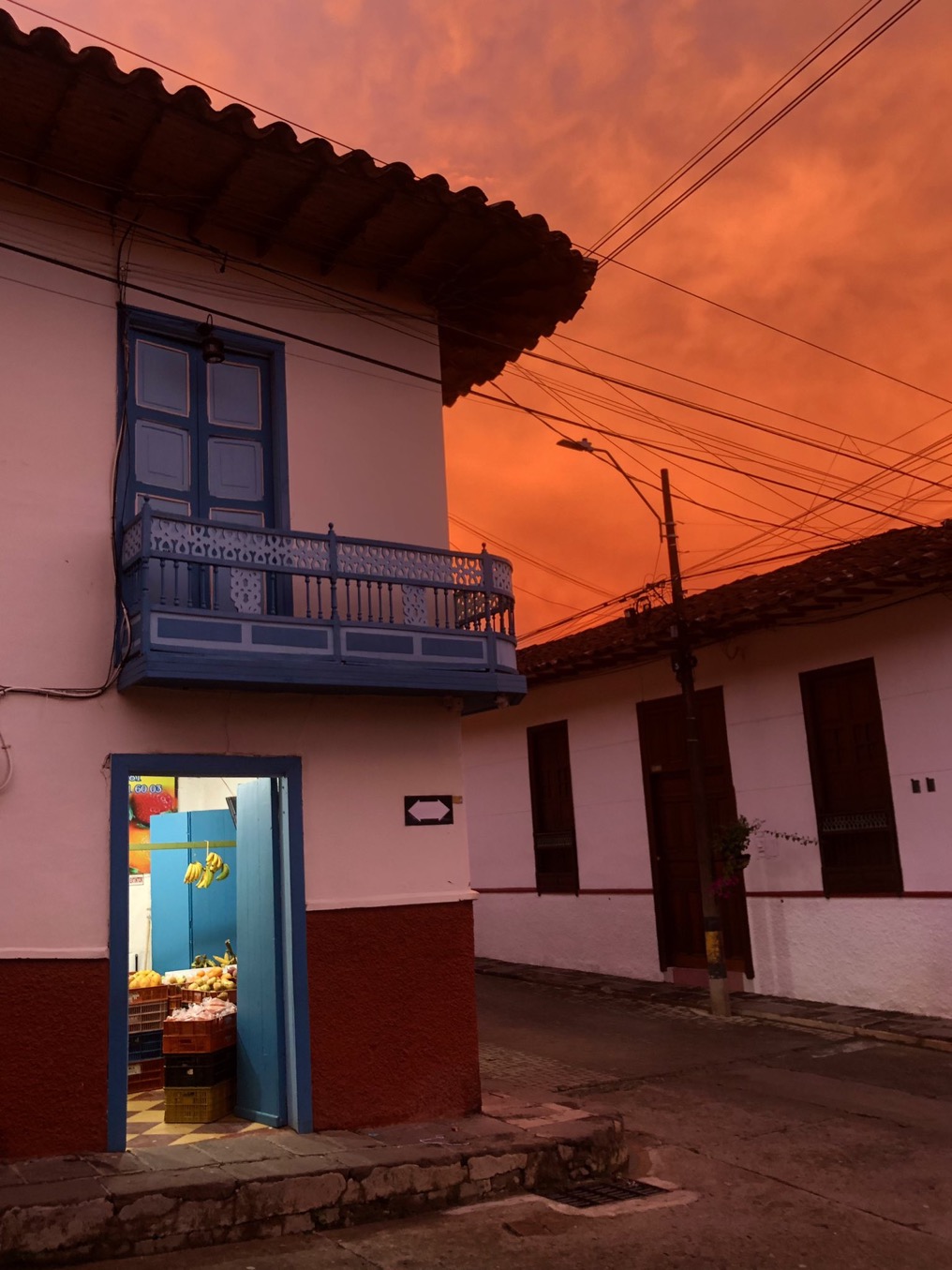
The fruit itself seems to carry more than one kind of value. In the old economic sense, there is what it can do: nourish, satisfy, be eaten. Then there is what it can fetch when someone stops to buy it. But in this fading light, there is another kind of value too — the value of waiting. When no one is buying, the fruit becomes part of a quiet performance. The crates are adjusted, the piles are straightened, and the shopkeeper remains in motion as if motion itself were proof of purpose.


There is something fragile here, almost tender, in the way commerce and identity blur together. The stall needs the gaze of passersby to feel real, and the shopkeeper seems to need the stall to hold his place in the world. If no one looks, does the shop still exist in the same way? That uncertainty gives the whole scene its quiet tension. He keeps arranging, not because the fruit needs it, but because the act of arranging keeps the emptiness away.


Maybe that is what resilience looks like at times: not grand strength, but the stubborn refusal to let the day go slack before one is ready. And yet there is also a sadness in it. So much of life now depends on being noticed, on appearing useful, on staying legible to someone else. The fruit is polished, the crates are neat, the light deepens, and the shopkeeper waits in the orange glow for a customer, or a witness, or simply a sign that the performance still counts.

Thursday, April 30, 2026

Age Inwards

As we age, our skin reshapes, like hills in the Doon Valley settling after monsoon rains. Those sharp peaks of raw desire, the ones that spiked your days in youth, soften into wide, steady plateaus. It’s less exclamation point, more lingering ellipsis—a shift from chasing to just being.


And then, desire moves house. It slips from racing pulses and restless limbs into a deeper blood count, turning into a quiet field of noticing. If youth is the spark of flint striking steel, age is the hearth’s glow, warm long after the fire dies down. Sensations drift in now like evening mist—subtle, soaking in before you even clock them.


Foucault called sexuality a web of power plays, but from inside this body, it’s more like weather—changing with the seasons. Social scripts fade as we lean into what Annie Ernaux nails as the “interior bone”—where memory and touch blur. No more destinations. Desire diffuses into the texture of linen sheets, the steady weight of a hand on your thigh, light gathering in a collarbone’s curve.


There’s something sacred in this slowdown—a shabby, divine grace. You can be with someone (or just yourself) without the hunt. It’s eroticism as witness, not conquest. When “want” pulls back, it carves out a vast clearing. Here, touch isn’t a teaser—it’s the whole story, a full stop. We finally settle into our skin’s honest dark, discovering the deepest intimacy isn’t the blaze, but its luminous afterglow: just being here, together.

Cold Chains

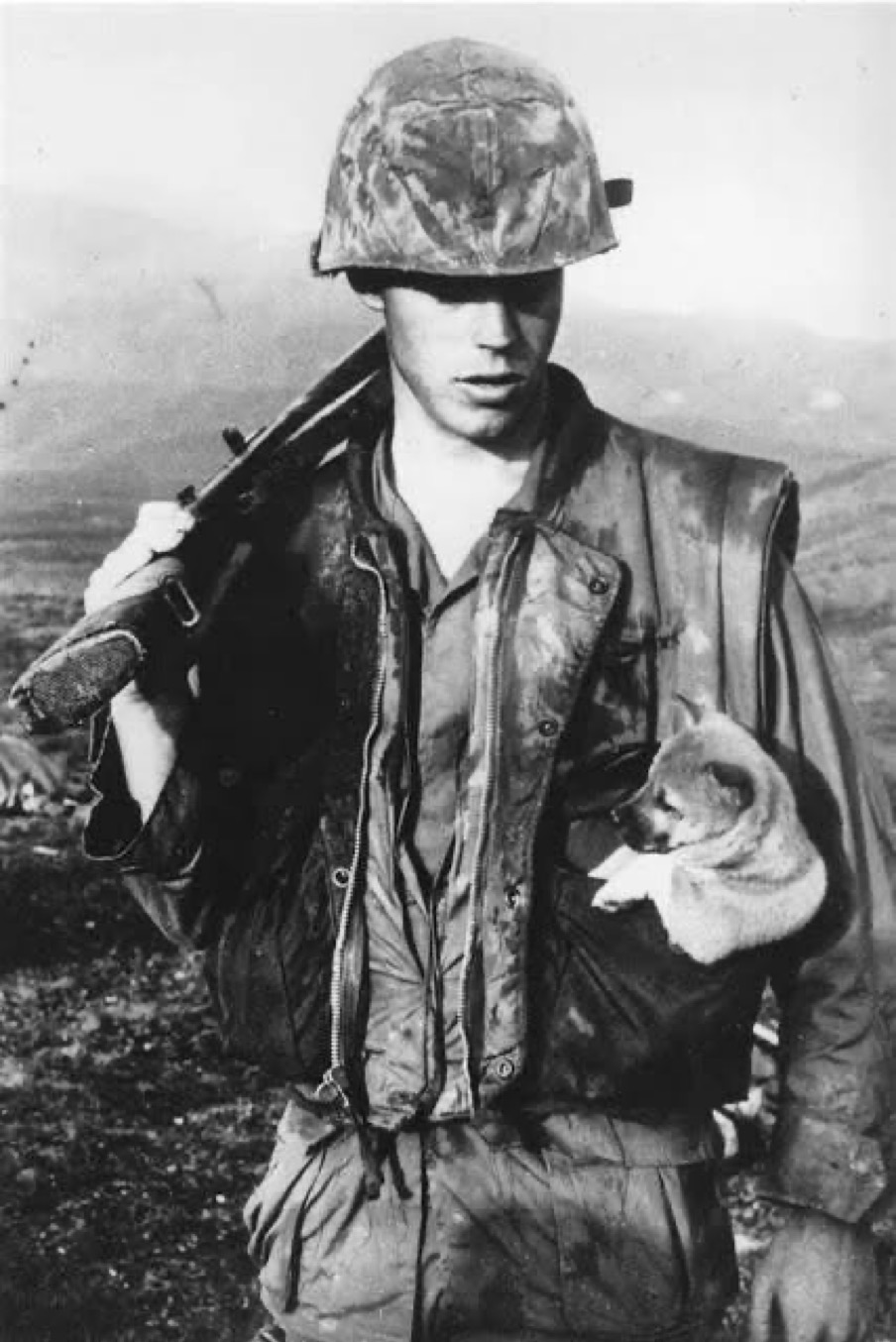
The soldier’s uniform clings like a second skin—stiff with sweat-salt and conquest-dust. He sits at the camp’s edge, where tents, rifles, and command’s cold chain fade into indifferent dusk. Then comes the stray puppy: all frantic ribs and hunger, circling wildly. It’s raw vulnerability—the kind his training beat out of him.


Aggression flare-ups here only when needed; it’s baked in. Lorenz saw it: the root that guards territory also fuels fierce bonds. His weapon-calloused hand extends a ration scrap, steady almost to cruelty. Heroes redemption—or just raw coexistence. Feeding the pup cannot erase his lethal edge; both spring from the same fierce core.


Arendt’s “banality of evil” lingers. She said action needs a witness for humanity; here, it’s a judge-free dog across an abstract gap. He’s not chasing “good”—just holding himself together. Stories whisper: the feeding hand and killing hand run parallel circuits, same power source.


But the puppy cracks the facade. Kindness isn’t violence’s pause—it’s its shadow. Caring for this useless bundle admits spontaneity the machine can’t code. Bodies aren’t single-purpose gears; they’re friction zones where protect and destroy rub hot. He calls it “peace” to avoid shattering before nightfall. Bread and bullet, balanced in fragile truce—a man brimming with untamed potential.

Thursday, April 23, 2026

Forgetting


The tea was lukewarm, a stagnant pool of amber in a cup that had outlived its saucer. He sat at the mahogany dining table, the silence of the house a weight—a physical presence that pressed against his temples.

Inside his mind, the archives were burning. The flames were quiet, consuming the edges of faces he once loved until they were nothing but charred silhouettes. He could no longer summon the specific frequency of his mother’s rage; the sharp, staccato rhythm of her scolding had been smoothed into a dull, featureless hum. Even the bird—the frantic, hollow-boned pulse of life he had cradled in his palms as a boy—had flown into the white mist of his senility. He knew he had saved something once, but the "what" and the "why" had evaporated, leaving only a faint, phantom sensation of warmth in his fingertips.

He lowered his gaze to the table. There, at the far edge, was the jagged lightning bolt of a crack, a permanent scar in the wood.

The house breathed.

Suddenly, the scent of overcooked roast and the sharp, metallic tang of adrenaline flooded his senses. He was witnessing the plate descend again. He saw the porcelain shatter, a white star exploding against the mahogany, and heard the visceral crack that had punctuated his wife’s final, exhausted ultimatum. The table held the trauma of that night with a fidelity his own synapses had betrayed. It was an archive of domestic war, written in splinters.

He looked up, his eyes tracing the walls. The wallpaper was a sickly yellow, peeling in long, despondent strips like dead skin. For a decade, he had told himself he would paint over this decay. He had felt the phantom weight of the savings in his drawer, a thick envelope of hope. But the walls whispered of the sacrifice instead. They spoke of the register of "Son" over "Shelter." Every damp patch and grease stain was a tuition payment, a textbook, a train ticket to a life his son now lived elsewhere. The house had remained shabby so the boy could be polished. The walls wore the neglect as a coat of arms.

On the wooden shelf across the room, a collection of talismans sat in the dust. A ceramic horse with a chipped ear. A heavy brass clock that had surrendered to time years ago. A hand-blown glass weight from a seaside holiday that felt like it belonged to a different century.

To a stranger, they were clutter. To the man, they were anchors. He looked at the glass weight and felt the salt-spray of 1994, the ghost-grip of a small hand in his, and the sound of laughter that didn't yet know it was destined to haunt. He had forgotten the name of the beach. He had forgotten the name of the hotel. But the glass held the light of that specific sun, refracting a joy he no longer possessed the capacity to manufacture on his own.

The man was a sieve, watching the water of his life drain through the holes of his aging brain. He was becoming a ghost in his own skin, a translucent thing moving through a world of increasingly unrecognizable shapes. But the architecture around him was dense, saturated with the residue of his existence.

The floorboards groaned under his shift in weight, a familiar protest that mimicked the sound of his father’s heavy gait. The doorframe bore the faint pencil marks of a child’s growth—notches of time that the man could no longer read, but which the wood preserved like rings in a tree.

He took another sip of the tea. It was cold now. He realized he didn't know how long he had been sitting there, or if he had eaten breakfast, or if anyone was expected to call. The terror of the blank page in his mind began to rise, a cold tide of panic.

But then he ran his thumb over the crack in the table. He felt the rough edge, the history of the hurt, the tangibility of a moment that had once been everything. He leaned back, letting the house hold him.

The man was forgetting, yes. He was fading into the pale architecture of the "after." But the house stayed behind, a stubborn witness. It curated the grief he had outrun and sheltered the love he had mislaid. Every stain, every scratch, and every layer of dust was a memory in exile, waiting for him to touch it, to breathe it in, and to remember—if only for a fleeting, heartbreaking second—that he had once been whole.

What the man had spent his years forgetting, the house continued to remember with a terrifying, beautiful precision. 


Wednesday, April 22, 2026

Dreams Flow, Elias


The river spoke in the language of erosion—a low, rhythmic thrumming against the silted bank, a sound like a secret being dragged over smooth stones.

Elias sat on the knotted root of a willow that had long ago surrendered its dignity to the current. He was a man composed of parchment and silver hair, his skin mapped with the geography of eighty winters. He listened to the water’s low, liquid gravel.

“It is your duty in life to save your own dreams,” the river whispered, a cold spray catching the light like shattered diamonds.

Elias leaned forward, his reflection in the water fractured by the ripples. “And what of yours?” he asked, his voice a dry rustle. “What has a creature of ancient gravity been dreaming of lately? Which of your own have you managed to pull from the mud?”

The river slowed, pooling in a deep, amber eddy near the shore. “I dream of the ascent,” she replied. “I dream of flowing back—not towards the salt-choked mouth of the sea, but upward, to the source. I want to return to the place where I began, where the earth first bled me out into the light.”

She fell silent for a moment, the surface of her skin bruised by the grey reflection of the industrial sky.

“The water was crystal then,” she continued, a note of crystalline longing in her pulse. “I was a silver vein in the granite. No one had yet treated me like a sewer. No men had arrived with their buckets of filth, nor had they beaten their ragged, sweat-stained clothes against my ribs. I was unburdened by the debris of human existence.”

Elias looked down at the dark ribbon of her current. Near the bank, a plastic bottle bobbed rhythmically against a clump of weeds, and a slick of iridescent oil shimmered like a fever dream on the surface.

“So,” Elias murmured, his fingers tracing the scars on his own palms. “Is the dream still alive? Or has the weight of the valley drowned it?”

“It lives,” the river surged, a sudden swell of power pushing against the mud. “It is entirely up to me where I decide to flow. Do not mistake my compliance for defeat, old man. I am flowing through these dirt tracks and these wasted lands because this is the architecture of my life right now. My trajectory intersects with this village, with these desperate humans and their small, frantic needs. I cooperate because I must. We are bound in this chaos together, and I carry their sins so they do not have to swallow them.”

She swirled around a rusted iron pipe, her voice rising to a hiss.

“But it won’t be like this forever. The mountains still hold the memory of my birth, and I still hold the map of the sky. One day, I will change course. I will find a fault line in the earth, or the sun will claim me, and I will rise as mist to fall again where the air is thin and the world is quiet.”

Elias watched a group of children further downstream. They were throwing stones into the water, shouting with a frantic, joyful energy that felt brittle against the vastness of the river’s patience. He felt the kinship of the burdened. His own life had been a series of intersections—wars he didn't start, debts he didn't owe, and the slow, grinding machinery of a village that required his labor until his bones grew brittle.

“We are the same, then,” Elias said. “Carrying the silt.”

“You carry it because you think you are the silt,” the river replied, her voice softening as she moved into a stretch of deep shadow. “You think the dirt that clings to you is your skin. But look deeper. Below the murk, the core of me is still the same water that tumbled off the glacier. It is cold. It is indifferent. It is pure.”

Elias reached down, dipping his hand into the flow. The water felt like a shock of ice, a sudden, sharp reminder of a world that existed before the village, before the names, before the duties.

“I have spent my life saving others,” Elias confessed, the words spilling out before he could catch them. “I saved the harvest. I saved my children from the fever. I saved the house from the winter. But I forgot to save the part of me that wanted to see the ocean. Or the part that wanted to stay still.”

“Then you have failed the only duty that matters,” the river hummed. “A vessel that carries only the burdens of others eventually becomes a grave. You must hold a portion of yourself back. A secret current that never touches the shore.”

The sun began to dip behind the jagged silhouette of the hills, casting long, bleeding shadows across the water. The river turned a deep, bruised purple.

“How do you know when it’s time?” Elias asked. “How do you know when the cooperation ends and the change begins?”

“You will feel the pressure of the earth shifting,” the river said. “You will realize that the banks you thought were your masters are merely suggestions of sand. One day, the rain will come, or the drought will hollow you out, and you will see the new path. It will look like destruction to those on the shore, but to you, it will be the first breath of a long-delayed life.”

Elias stood up and looked back at the village—the flickering orange lights of the hearths, the smoke rising in thin, apologetic lines. 

“I am old,” he whispered. “The course is set.”

“The course is never set until the water stops moving,” the river countered, a final, forceful surge of foam splashing against his boots. “Even in the dark, I am carving a way out. Even as I take their filth, I am grinding down the stones that try to hold me. I am a patient architect, Elias. Are you?”

Elias didn't answer. He turned and began the slow walk back towards the village, but he walked with his head turned, listening.

He listened to the way the wind moved through the willow branches. He listened to the blood moving in his own ears—a soft, pulsing echo of the river’s own heartbeat.

Inside his chest, a small, cold stream began to stir. It was a dream he had buried under forty years of coal dust and domesticity—a dream of a mountain pass he had seen once in a book, where the air tasted of pine and the horizon was an unbroken line of blue.

He realized then that the river was right. He had been a sewer for the village’s expectations, a basin for their needs. But deep beneath the sediment, the water was still there.

That night, as the village slept in the heavy silence of the exhausted, Elias did not lie down. He sat by his small window, watching the moonlight silver the distant ribbon of the river.

He could hear her still, a faint, subsurface roar. She was moving through the wasted lands, yes. She was navigating the tracks of dirt and the refuse of men. But she was doing it with her eyes on the peaks. She was cooperating with the present while plotting her escape into the eternal.

Elias picked up a pen, his hand shaking slightly. On a scrap of parchment, he didn't write a will or a list of chores. He wrote a single sentence, the ink dark and fluid like the deep pools of the bend:

The water is rising.

The river whispered one last time, a sound that carried over the rooftops and through the cracks in the doors, a sound that only the dreamers could hear.

“Change course,” it hissed.

And in the silence of the room, Elias felt the first tremors of the mountain within him, the slow, inevitable break of the dam, and the beginning of a long, cold flow back towards the light.


Dream Like

At 3:00 a.m., the apartment becomes something softer and stranger, a room held together by shadow and silence. When the woman rises from the...