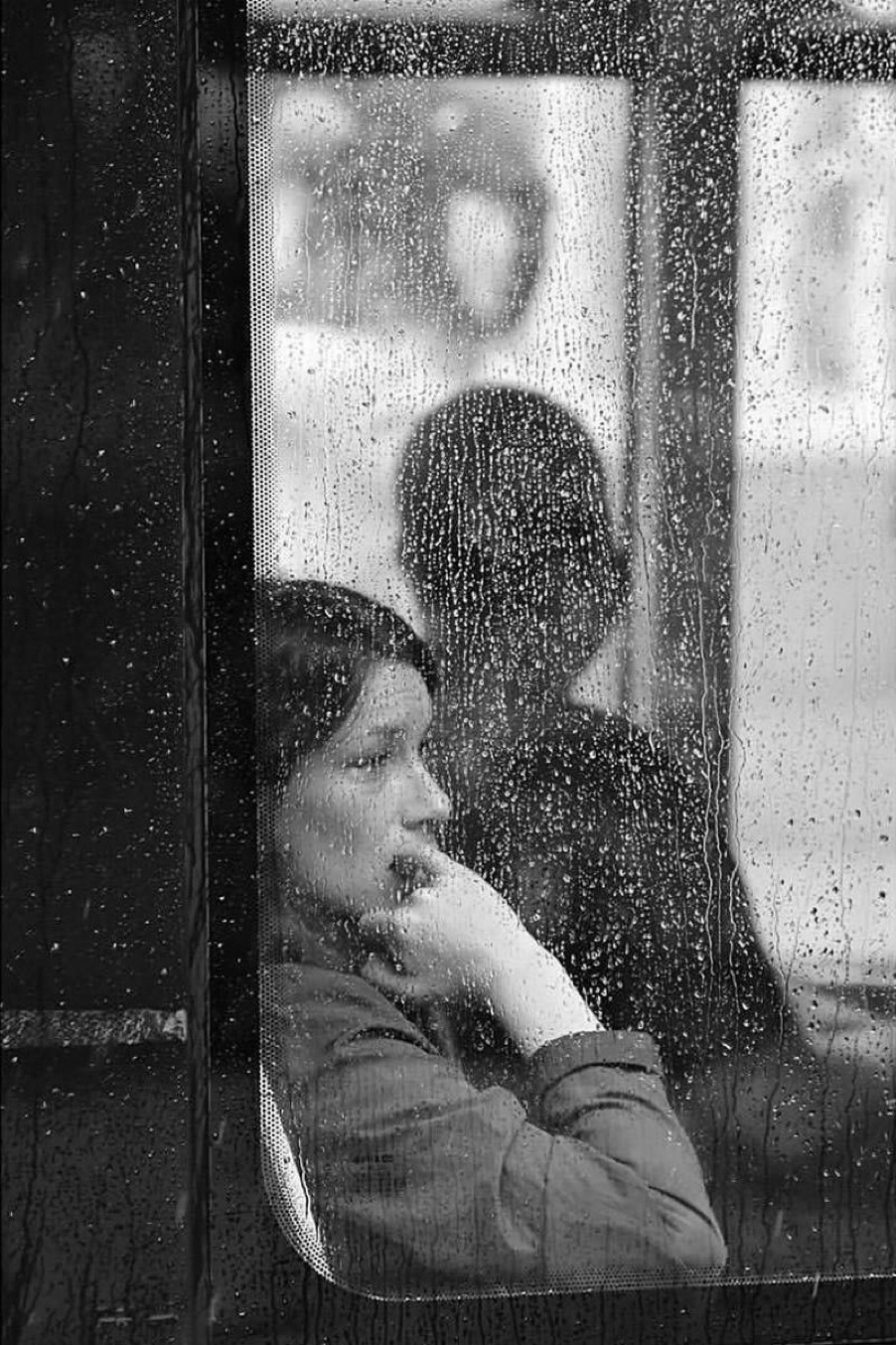
The glass turns the platform into a blurred wash of grey, as if the world outside has already begun to dissolve. The train is still, and that stillness changes everything. Inside, the air feels damp and close — carrying the smell of wet wool and the low hum of a ventilation system that sounds alive but cannot speak. Nothing is moving, and yet the carriage already feels like a place of departure.
That is what makes waiting so strange. We tend to think movement begins when the wheels turn, but often the deeper shift happens before that. Stations, platforms, and waiting rooms hold a quiet power precisely because they suspend us between identities. In those spaces, we are no longer fully who we were, but not yet who we are becoming. The roles we carry — daughter, worker, citizen, commuter — vanish for a moment, and what remains is only the passenger: anonymous, suspended, unclaimed.
There is something almost ritualistic about this stillness. We arrive with luggage, tickets, and schedules, as if the props of travel give us permission to change. Routine keeps us steady, but it can also harden into habit — and so we seek the in-between, the non-place, because it creates room for something internal to shift. Hermann Hesse understood this well: movement through the world so often mirrors movement through the self. The outer landscape blurs so that the inner one can quietly rearrange itself.
The young woman by the window does not need the train to move in order to feel that she has already left something behind. Her withdrawal is quiet, but it carries the weight of transition. She is not just waiting for departure but is already inside it. That is the secret of these threshold moments: the self begins to move before the body does. Old certainties fall away in silence, and the future has not yet arrived to replace them.
Perhaps this is why transit feels so intimate. It holds us in the fragile space between endings and beginnings — where identity is less fixed, more permeable, more vulnerable. The deepest movement often begins in stillness. Even when the train has not moved an inch, the heart may already be on its way.


No comments:
Post a Comment