The carriage feels like forced intimacy — swaying through dark countryside with the heavy tiredness of a room without walls. Two men sit close enough to hear each other breathe, yet remain separated by a distance far greater than the space between their seats. One has drifted into sleep. The other hides behind a newspaper. It is a small scene, but it captures something central about modern life: we can be physically close and still remain completely out of reach.
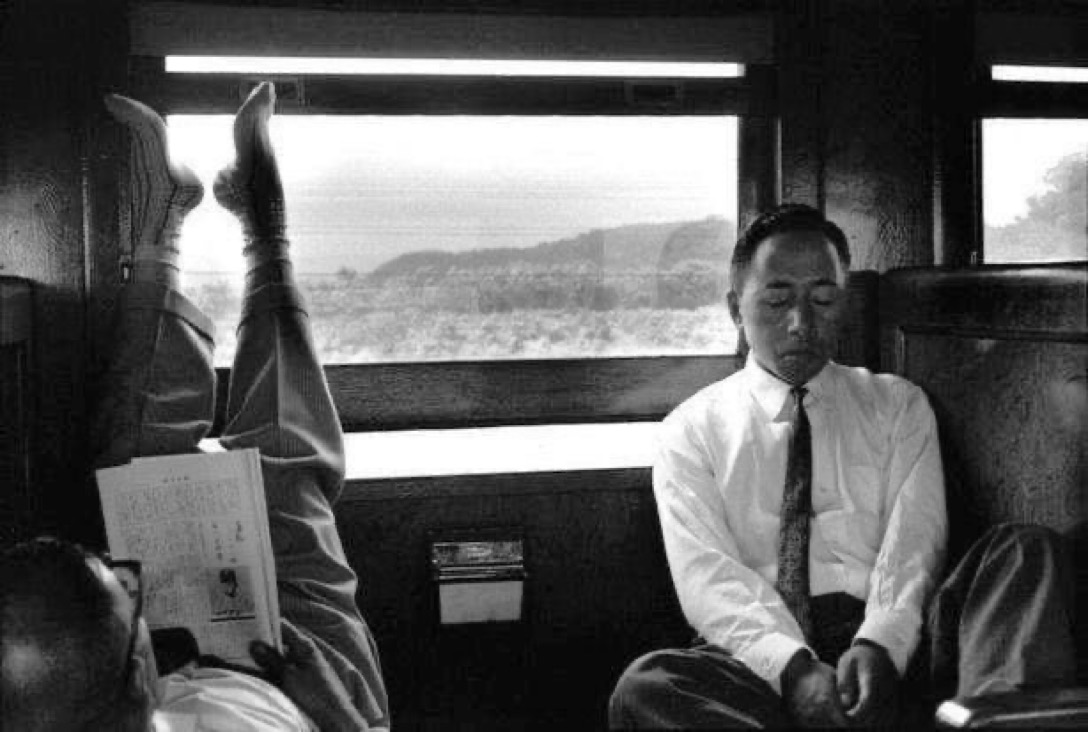
We like to imagine ourselves as deeply social beings — always connected, always reaching towards one another. But in places like this train carriage, what we actually witness is a more delicate art: the art of not intruding. Erving Goffman understood this well. There is an etiquette in mutual invisibility, a quiet agreement to leave the other person intact. Looking away is not always coldness. Sometimes it is respect. Sometimes it is merely the unspoken price we pay for sharing space.
That makes the stranger less a threat than a condition. We are not locked in open conflict, as Hobbes might have feared. Instead, we practice a softer kind of distance — one that protects the self while allowing the body to remain in company. In a world of relentless demands, messages, and interruptions, that silence can feel like relief. The train carriage becomes a temporary shelter from everything that pulls at us elsewhere.
The question, then, is not whether we are becoming less humane but whether we are learning to survive too much contact. The modern stranger is already full — of messages, expectations, habits, fatigue. The newspaper rustles, the train sways, and each man stays inside his own boundary. What passes between them is recognition.
This is what makes the scene revealing. The stranger across from us is neither enemy nor friend. He is a mirror held at just enough distance to show us our own desire for closeness without obligation.


No comments:
Post a Comment